Friday, October 5, 2012

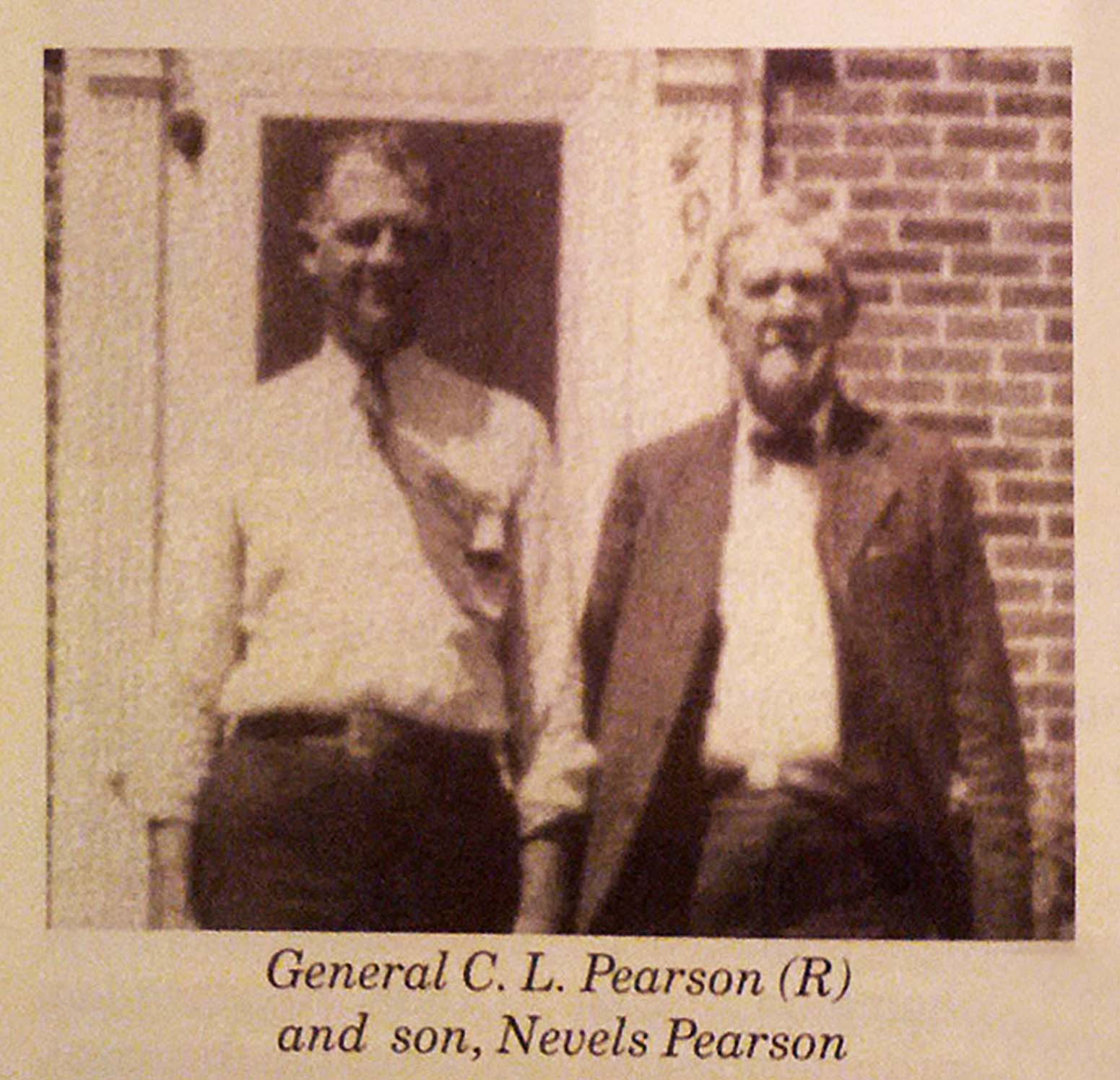
General Charles Lafayette Pearson

They called him general. General Charles Lafayette Pearson, Charles a name fit for a king who lost and won his crown, Lafayette, for a general who fought for a noble cause.


A graduate of law at the University of Alabama, he was too young to have fought for the south in the Civil War, too old to have fought in the Spanish American War. The French gave him his honorary title when he completed four years of graduate study in France, where when the debate continued over revolution and counter-revolution, church and state, and monarchy and republicanism. Young Charles, for he was perhaps in his late twenties by now, was influenced by the moderate President Jules Grévy and his brother Jules Philippe Louis Albert Grévy, who was one of his instructors.

He returned to Alabama and to his father’s farm. He married the beautiful and mysterious Zenia Blasingame, and they had nine children, unusually named and exceptionally well-educated, who, of those that survived the rigors of childhood, grew up, moved away, and lived good lives.

Charles became Brigadier-General of the Alabama State Troops, and so earned his title.

Charles, good son that he was, cared for his father and mother until their deaths. He practiced law in Tallapoosa County and oversaw a large farming operation in the red clay hills of Alabama that grew to over 42,000 acres.

The farm is gone, sold to a lumber company, and the land has reverted to pine trees and kudzu, the children are gone, what remains is a small cemetery lost in the woods, appropriately called the General Charles Lafayette Pearson cemetery.

The general died on January the 12, 1894 and his remains lay along with those of his father and mother and a few other souls.

Notes.

During a time in Alabama state history when ordinary working-class citizens opposed compulsory education, he insured his children got a good education. Several of them went to Emory College in Atlanta, others to Kansas State in Manhattan. One son, James Nevels Pearson taught at Michigan State after graduating from Kansas State. Another son, Varlourd left Kansas State to enlist in the Army during World War I (He died during the Meuse-Argonne Offensive and received the Distinguished Service Medal), another son Madison Bertand Pearson, also graduated from Kansas State University and played on the World Champion Chicago Bears team in 1932.

The general's oldest surviving son was Carlos Lopez Pearson. There is little information available about him other than a draft registration for World War II that declares he was born in Hudleyville, Alabama, March 14, 1887, and was then (1942)living in Wenatchee, Washington. The name Carlos Lopez is a play on his father's name, Charles Lafayette - Carlos is Spanish for Charles and Lopez comes from Antonio López de Santa Anna, the Lafayette of Mexican independence.

I am not able to independently verify that Charles Pearson was a Brigadier General of the Alabama State Troops or to learn the exact organization referenced.

Personal note.
 
The General is my great great uncle.

Great great grand-daddy James Madison Pearson (1817 - 1891) was born in Monticello, Jasper County Georgia. In the 1830's, he left Georgia for the new state of Alabama, settling on land recently taken from the Creek Indians along the Coosa River,  some 12 miles north of Dadeville, in Tallapoosa County.

Read about the Creek Wars, Alabama Department of Archives.

James and wife Elizabeth Ann Brown had nine children. See O'Farrell Family. Included in this brood, was my great great grandfather Benjamin Rush Pearson, born 1849, and his younger brother Charles Lafayette Pearson, born 1854.


More sources and notes


General Charles Lafayette Pearson, courtesy of George Campbell


Two story family farm in Alabama in the Auburn University Libraries

 Find a Grave


Wednesday, October 3, 2012

Wautier Pieressone 1296

My family connection to the Pearson name starts with my mother Elmire Pearson and her father James Madison Pearson. The name can be traced back for certain to Edward Peersonne, born circa 1575 in Wilmslow, Pownell Fee, Cheshire, England. Family Tree.

The ancient county of Chester, now Cheshire (like the cat), lies in the northwest of England. Cheshire borders both Wales and Scotland. For many years after the Norman invasion of 1066, it was a area of dissent. Eventually, the Anglo-Saxon were overcome by William the Conqueror's French. Then, in the 13th and 14th centuries, it was awash with battles between the Scots to the north and the English. Today, the county borders the great city of Manchester and the rivalries are on the football field.

Once upon a time...

The first recorded use of the name Pearson is Wautier Pieressone del counte de Berewyk, who signs the Ragman Rolls as a land owner in Berwickshire, 28th Aug 1296, pledging allegiance to Edward I, King of England.

Read the Ragman Rolls in PDF. Read online, Ragman Rolls.

[Note, This date, 1296, has been commonly misreported as 1226. See Ancestry. But other sites have got it right. See MacPherson. King Edward I's reign was, 1239 - 1307. It was this Edward who was known as Longshanks and the Hammer of the Scots, who was portrayed in the movie Braveheart. The Ragman's Roll spelled Pierssone using the old letter  f, similar to the German ß (called eszett (sz) or  sharp s).]

Berewyk, or modern day Berwickshire, is an ancient border county situated on the eastern coast of Scotland. It lies on the north side of the river Tweed with the English county of Northumberland to the south. The title count signifies only a chieftain or clansman, as the Ragman's Roll has many other counts of Berewyk, and the Scots tended to organize themselves around a chieftain, or family member.

The suffix wyk is Frisian and signifies a village. Read more. The first name Wautier comes from the French Waltier, and the Anglo-Saxon, Waldheri, and signifies a (powerful) warrior.

In researching the Pearson Family, keep in mind the multitudes of spellings including: Peerson, Peersonne, Piersonne, Piersone, Pierson, Pairsone, Pearsone, Peirsonde, Peirsone, Peirsound, Pesirsaunde, Persone, Peyrsoune, Peyrson, etc.. What little that can be known with certainty about the name Pearson is that it is a combination of Piers and son. Piers is French for Peter. The designation Pierson, simply means son of Peter.

The name Piers over the centuries became Peter, keeping its French spelling in Scotland, Ireland, and in some northern English counties. During the Middle Ages, Piers was commonly used throughout England. Piers Plowman, written in the later half of the 14th century by William Langland, is a well-known Middle English allegorical poem. Piers Morgan, of Scottish and Irish descent, British journalist and CNN host has resurrected interest in the name.

William Wallace from Wikipedia
What of this Warrior, son of Piers, landowner of Berwyk? We know that he was a contemporary of William Wallace, who died in 1307. But we will never know if Wautier Pieressone fought with Wallace at the Battle of Stirling Bridge in 1297, a year after Wautier signed his oath of allegiance to Edward.

One wonders ...


Tuesday, October 2, 2012

Pearson's Dragoons

Note. I have no information to directly connect Pearson's Dragoons with my family. I just wanted to get this down in case some information should turn up.

The Civil War impacted every corner of the South and Tallapoosa County was no exception. One estimate is that small rural Tallapoosa County contributed almost 3,000 soldiers to the war effort on the Confederate side, and of these almost a third perished. A Few Soldiers of Old Tallapoosa.


Campaign Flag First Alabama Cavalry Regiment


Pearson's Dragoons 

The First Alabama Cavalry Regiment was organized at Montgomery, November, 1861 under the command of Colonel James H. Clanton.

The First Alabama Cavalry Regiment fought at the battles of Shiloh and Murfreesboro. It was also part of the rear guard which protected the retreat from Tullahoma and Chattanooga, losing severely at Duck river; fought at Chickamauga, Clinton and Knoxville, and took a brilliant part in the Sequatchee raid. It was engaged in retarding Sherman's advance on Atlanta.

Read more.

Company D of the First Alabama was also known as Pearson's Dragoons. It is also called Company C and may have had other designations due to reorganizations. It was formed in Tallapoosa County. Its regimental commanders included: John G. Stokes (resigned, 25 Oct 62); Jesse W. Fitzpatrick (resigned, 26 Nov 64); Henry C. Washburn (1st Lt., paroled as Capt., Co. "D").

The company designation changed during the war due to reorganizations. Other designations include: "Co. C, 1st Alabama Cavalry; Co. D, 12th Alabama Cavalry, later 2nd Co. C". I have also seen reference to Companies C, D, and F. See following.

The 1st Alabama Cavalry Regiment surrendered at Charlotte, North Carolina, May 3, 1865. Pearson's Dragoons was then under the command of Henry C. Washburn, and designated as Company D. Seventy-two officers and men of the Alabama First Cavalry signed paroles. Re: James Henry Pitts.

Lost in all of this is the explanation for the name Pearson's Dragoons. The Pearson family lived in Tallapoosa County from shortly after the War of 1812 and the Battle with the Creeks. They owned a significant amount of land in the county. That land was located off modern Highway 280 and up Slaughter’s Crossing Road. Today, the land is owned by Kimberly Clark.

The land was passed down to General Charles Lafayette Pearson, but he was born in 1854, and would have been only six or seven at the outbreak of the Civil War. His father James Madison Pearson, born Monticello, Jasper Co., Georgia in 1817 is the more likely connection, if any, to the company name. He was an attorney and farmer, who passed the farm down to his son Charles. Family cemetery of Charles Lafayette Pearson, including his father James Madison Pearson.

There were nine children born to James Madison Pearson and his wife Mary White. My connection is to older son, Benjamin Rush Pearson, my great-grandfather, who became a doctor and practiced in Birmingham. His son, my grandfather, was also named James Madison Pearson.

My grandfather often spoke about his adventures in and around Dadeville and Tallopoosa County.

Saturday, February 4, 2012

Ships

This article is a stub. I am trying to sort out the conflicting information on ships carrying Pearsons to America. I will put source information here and come back and sort it out.
Edward PEARSON was born in 1648 in Wimslow Parish, Pownall Fee, Cheshire, England. He died on 3 Jun 1697 in Bucks Co., Pennsylvania. Edward and his family came to America on the ship "Welcome" in 1687. They presented their credentials at the Quaker Meeting on 4/1/1687.

Edwards' brothers, Thomas and John came to America on the ship "Endeavor" in 1684.
http://www.familyorigins.com/users/p/e/a/William-H-Pearson/FAMO1-0001/d266.htm

See Pearson Lineage for reference to Endeavor and many other source citations.

Fallsington Monthly Meeting House

Three Pearson brothers, John, Edward and Thomas, left England and arrived in Pennsylvania around 1683 - 1687. My lineal descendant is Edward.

Sources consistently record that Edward, 1651 - 1697, was born in Wilmslow Powell, Cheshire, England and died at "Falls MM, Bucks County, Pennsylvania". Edward married Sarah Burgess, 10 years his junior. She survived his death by 10 years. Source, see citation 1016 and 1017, Family Tree Maker. This source lists the last two children, Phoebe, born 1685 in Morley Meeting House in Pownall Fee, and Martha, born 1687, in Darby Meeting House, Pennsylvania. If true this would date Edward's arrival in America within those two years. Note. The source does not list John Pearson, 1728 - 1790, as a child of Edward and Sarah. this needs to be reconciled.

Fallsington (Falls) Meeting House 1933
The Falls MM referred to where Edward died is a reference to Fallsington Meeting House at 9300 New Falls Road in Meetinghouse Square near the intersection of New Falls and Tyburn Roads, in Fallsington. Today, the area is part of the city of Levittown. It was the first Friends meeting established in Bucks County, which, itself, was established in 1682. As a witness to Friends' testimony for simplicity, no gravestones were used until the 1850's. Image from Some Old Quaker Meeting House in Pennsylvania and part of Ancestry.com. the original meeting house no longer exists, and what is pictured is a building constructed in 1789. The building today is operated by the Friends as a Day Care Center.

For additional information on the meeting house, see the above source and  Historic Fallsington.

Friday, February 3, 2012

Beginnings of the Pearson Family

Peter was the first Pearson

The Normans introduced the practice of surnames in England, no doubt in order to collect taxes. Later, when the feudal system was abolished and land could be owned outright, surnames took on a legal necessity. Occupational surnames became common, names such as Smith, Chapman, Brewer, Baker, Wright and Taylor. So too, baptismal names, William-son, John-son, David-son, and Peter-son.

The French speaking Normans spelled Peter "Pierre". Thus, we have Pierson, Peersonne, and Pearson. During the First World War, when my grandfather was in France, he chose for a time to revert to the spelling of his last name as Pierson. This is a good lesson for those who follow records. The spelling of names change.

Edward Peersonne

If we have to pick a date and a place, let us choose 1575 when Edward Peersonne was born.The place of his birth is uncertain, a statement which needs some explaining, and some understanding of history.

England in the 1570's

It is England in the 1570's. Pope Pius V excommunicates England's Queen Elizabeth I. Martin Frobisher discovers Frobisher Bay while searching for the Northwest Passage, and Francis Drake leaves Plymouth to begin his circumnavigation of the globe.

William Shakespeare is still a wee lad and England has not yet begun to colonize North America.


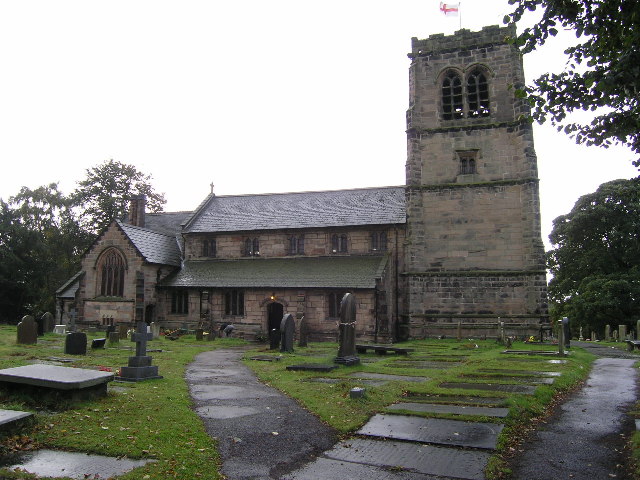
St. Bartholemew's Church, Wilmslow Parish

St. Bart's


There is Wilmslow Parish on Mobberley Brook, in Bollin Township, Cheshire, England. Here is the 16th century church of St. Bartholemew's, and its parish records, evidence of the birth of Edward's nine children, many of whom are given Dayne Row as the place of their birth.

Today, there exists a Dane Drive and Dean Row in Wilmslow, with Dean's Row appearing to be the more ancient of the two. It is a dangerous thing, but let us assume that it is Dean Row where Edward's nine children were born. It lies about a mile east of Wilmslow in the midst of fields and from this we may guess again that the Peersonnes were tillers of the fields. The name and the occupation are coincidental of William Langland's Middle English literary creation Piers Plowman.

I said the place was uncertain.

St. Wilfred's

There is the 13th century St. Wilfred's church in Mobberley Parish, built on the remains of an even more ancient Saxon church, lying to the west of Wilmslow.  It is here in the parish cemetery that in 1656 on August the 16th, Robert Pearson was the first person buried at Mobberley Quaker Cemetery.

St. Wilfred's church, image credit churchcrawler


All of this is known from the Wilmslow parish records. I am not taking credit for the information. That credit goes to Wally Garchow and Corinne Diller and others who took the time to look over baptisms, marriages, and deaths and record the information.

Ancestry now provides this information to the public.

Making sense of history


Making sense of a few records is no easy matter.

What happened in Edward Peersonne's life is for the most part unknown and always will be.  Between  Edward's birth in 1575 and Robert's death in 1656, many historical events took place. Kings would come and go, a Commonwealth was for a time the government. William Shakespeare had written all of his plays and was now dead and buried many years. America was a thriving colony that beckoned many Englishmen and women seeking a better life.

And yes, George Fox had a vision that man could directly receive a vision from God. Quakerism, his religion was gaining in popularity and counted among its adherents 60,000 souls. Pennsylvania would call on many Quakers, including some named Pearson.


Thursday, February 2, 2012

Elizabeth Janey (Janney) - mother of Edward Pearson

Image of St, Wilfred's from Wikipedia


Elizabeth Janey (Janney), 1620 - 1675, wife of Lawrence Pearson and mother of Edward and Thomas Pearson, is buried in St. Wilfred's Church, Mobberley, England. See Elizabeth Janney.

For an image of the church and other information, visit the website of Craig Thornber.

A thumbnail history of Lawrence and Elizabeth is given by Rootsdigger.

Lawrence was married in the Quaker meeting to Elizabeth Janney, of a very active Quaker family. Elizabeth, wife of Lawrence, was buried 13 Aug 1662 at Mobberly. She was dau[ghter] of Randle Janney and Ellen Allred. In 1657, Lawrence Pearson of Wilmslow Parish refused to pay a tithe, and had a horse worth three pounds confiscated to pay an eight shilling tithe. In 1665 Lawrence Pearson of Pownall Fee was arrested at a Quaker meeting and jailed for two months. In 1650, Lawrence Pearson was imprisoned for testifying in the streets at Highfield, County Derby. In 1660, Robert Pearson, his brother, was put in jail for refusing to take an oath.
The story has a ring of truth. Elizabeth lived until 1662, Lawrence until 1673 or 1674. In his will he identified his profession as mason. His will left "unto my sonne Edward the dishboard, the little plow, and the little pair of plow irons, etc." The other children, including Thomas, received shares of the tiny estate.

Consider that Lawrence and Elizabeth's two sons Edward and Thomas left England about 1683 and settled in Quaker communities in Pennsylvania.